- Apple Product Documentation. Make Terminal windows stand out with profiles. When you’re logged in to several servers, unique background colors and window titles specified in profiles help you easily spot the right Terminal window.
- Jan 09, 2016 How To Find the Terminal App in Mac OS X. By Admin Published January 9, 2016 Updated January 11, 2016. The Terminal app icon in Launchpad. Terminal is the name of the command-line interface app to your computer. This app is all about text commands, but don’t be scared! With the right commands it’s hard to go wrong.
Make Terminal windows stand out with profiles
For earlier versions of Mac OS X, including Mac OS X Mavericks 10.9, Mac OS X Mountain Lion 10.8, Mac OS X Lion 10.7, Mac OS X Snow Leopard 10.6, Mac OS X Leopard 10.5, Mac OS X Tiger 10.4, and before, the process to obtain those installers differs a bit. Downloading Mac OS X. Color themes for default macOS Terminal.app. This is a set of color themes for default macOS Terminal.app (initially ported from iTerm2 color schemes, collected by @mbadolato). Screenshots are demonstrated below and in the screenshots/ directory of this repo.
When you’re logged in to several servers, unique background colors and window titles specified in profiles help you easily spot the right Terminal window. Use profiles built into Terminal, or create your own custom profiles.
Navigate Terminal windows
Add marks and bookmarks as you work, then use them to quickly navigate through lengthy Terminal window output.
Manage processes
Mac Os X Terminal Commands
Use the inspector to view and manage running processes, and change window titles and background colors.
To browse the Terminal User Guide, click Table of Contents at the top of the page.
Terminal User Guide
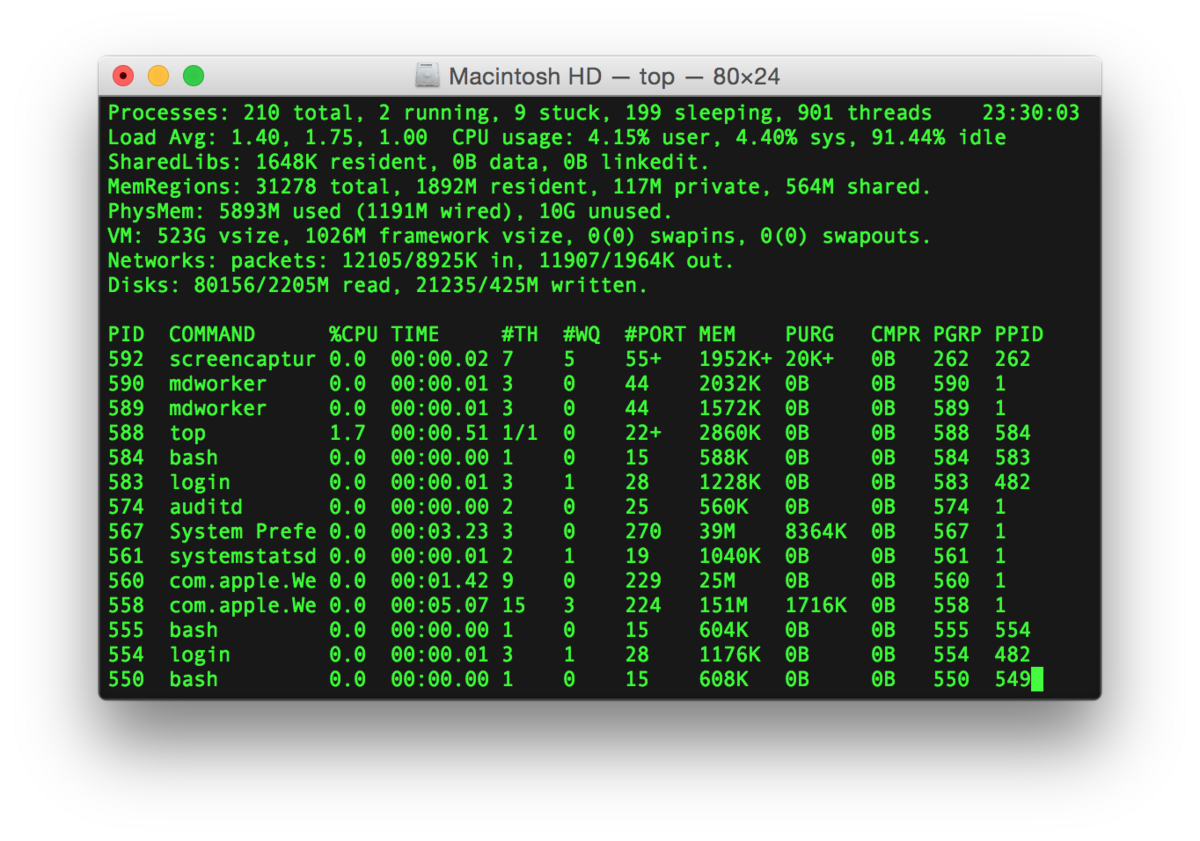
Each window in Terminal represents an instance of a shell process. The window contains a prompt that indicates you can enter a command. The prompt you see depends on your Terminal and shell preferences, but it often includes the name of the host you’re logged in to, your current working folder, your user name, and a prompt symbol. For example, if a user named michael is using the default zsh shell, the prompt appears as:
This indicates that the user named michael is logged in to a computer named MacBook-Pro, and the current folder is his home folder, indicated by the tilde (~).
Open Terminal
On your Mac, do one of the following:
Using Terminal Mac
Click the Launchpad icon in the Dock, type Terminal in the search field, then click Terminal.
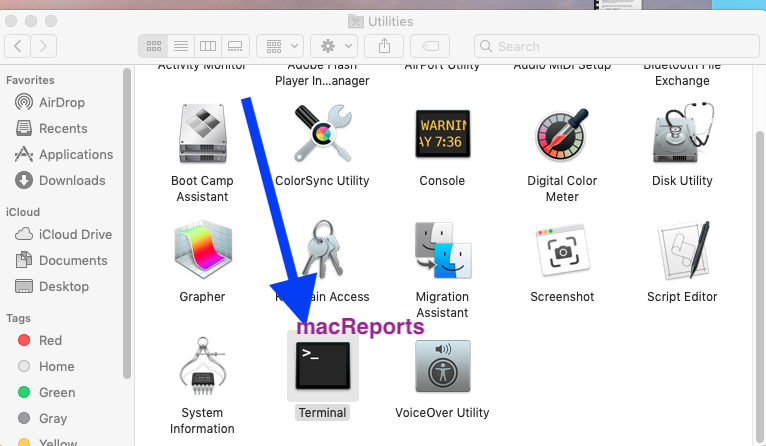
In the Finder , open the /Applications/Utilities folder, then double-click Terminal.
Quit Terminal
In the Terminal app on your Mac, choose Terminal > Quit Terminal.
Quit a shell session
In the Terminal app on your Mac, in the window running the shell process you want to quit, type
exit, then press Return.

This ensures that commands actively running in the shell are closed. If anything’s still in progress, a dialog appears.
Terminal App Mac Os X
If you want to change the shell exit behavior, see Change Profiles Shell preferences.