Apr 14, 2020 Click Next Install, and Boot Camp Assistant begins downloading and installing the necessary Windows drivers. When it’s done, click Finish and your Mac. Online shopping for Mac Operating Systems from a great selection at Software Store. $21.51 (2 open box & new offers) Macintosh System 7.5. By macintosh system 7.5. Unknown Platform.
Before my shift to using macOS as my daily work operating system, I was using a myriad of GNU/Linux platforms. Linux (as well as FreeBSD and OpenBSD, upon which macOS is built) provided me with easy access to the various open source software via a package manager.
What is a package manager
A package manager is a command line tool that gives me access to a myriad of pre-built (or sometimes to source code if desired) software packages to install and download on my computer. I could open a terminal and simply type in a command to tell the package manager to download and install any freely available open source software my heart (and requirements) desired.
Homebrew will 'install the stuff you need that Apple didn't.'
Although macOS has the App Store, it's not a repository of my favorite open source software (at least not in their raw unadulterated forms). Things like mplayer, wget, and gcc aren't in the App Store and searching for or building the source code for a package can become onerous.
This is where Homebrew for macOS saves the day!
What is Homebrew
Homebrew touts itself as 'the missing package manager for macOS' and that it will 'install the stuff you need that Apple didn't.' Once installed on your Mac, you'll have access to hundreds of open source packages ready for you at your fingertips. Need to download a youtube video? Open a command prompt and type 'brew install youtube-dl'. Need to cross-compile for another platform? Type in 'brew install gcc'. Want to play Windows PC based games on macOS? Type in 'brew install wine'. It's that easy.
Installing Homebrew
Installing Homebrew also couldn't be easier.
- Start terminal.
- At the command line type in:
- /usr/bin/ruby -e '$(curl -fsSL https://raw.githubusercontent.com/Homebrew/install/master/install)'
- Hit Return.
- Hit Return again to allow the install to start.
- Enter your Password.
Hit Return.
Wait for the download to start and for the installer to finish. That's it!
Installing software packages
Once you've got Homebrew installed, you can now download any open source software you like, called formulae, that is maintained by the package manager developers. There are hundreds of apps to choose from. For example, let's say I wanted to install a lightweight torrent client like Transmission. Here's how to do it.
- Open terminal.
- At the command line type in:
- brew install transmission
- Tap Return.
Done!
That's it! Super fast and easy.

Final comments
With the amazing graphical interface Apple made on top of its BSD underpinnings, it's easy to forget the power that the UNIX command line can provide. It's flexible and fast with an incredible amount of free software that can turn any user into a power user. Do you think the App Store should rollout open source software packages into its scope? Is having third-party package managers such as Homebrew the better option? Lets us know your thoughts in the comments!
We may earn a commission for purchases using our links. Learn more.
Lawsuit timeGoogle faces privacy lawsuit over tracking users in apps without consent
Law firm Boies Schiller Flexner has filed another lawsuit against Google. This time, the law firm has accused Google of tracking users in apps even after opting out.
Lesson 21: Installing Software on Your Mac
/en/basic-computer-skills/installing-software-on-your-windows-pc/content/
Installing software on your Mac
Your computer allows you to do some really amazing things. Digital photo editing, sophisticated computer gaming, video streaming—all of these things are possible because of different types of software. Developers are always creating new software applications, which allow you to do even more with your computer.
Installing from a CD-ROM
From the mid-1990s through the late 2000s, the most common way to get new software was to purchase a CD-ROM. You could then insert the disc, and the computer would walk you through through the installation.
Now, almost all software has moved away from this model. In fact, Apple no longer sells computers that include a CD-ROM drive.
Installing software from the Web
Today, the most common way to get new software is to download it from the Internet. Applications like Microsoft Office and Adobe Photoshop can now be purchased and downloaded right to your computer. You can also install free software this way. For example, if you wanted to install the Google Chrome web browser, you could visit this page and click the Download button.
The installation file will usually be saved to your computer in the .dmg format. Pronounced dot d-m-g, this is the standard extension for installation files on Mac computers. You can follow the steps below to install an application from a .dmg file.
- Locate and download a .dmg file.
- Locate and select the .dmg file. (It will usually be in your Downloads folder.)
- A dialog box will appear. Click and drag the icon to your Applications folder.
- The application is now installed. You can double-click the icon to open the program.
- On the desktop, there will probably be a disk drive icon with the name of the application. This is known as a volume, and it is not needed after the application has been installed. You can simply drag it into the Trash on the dock.
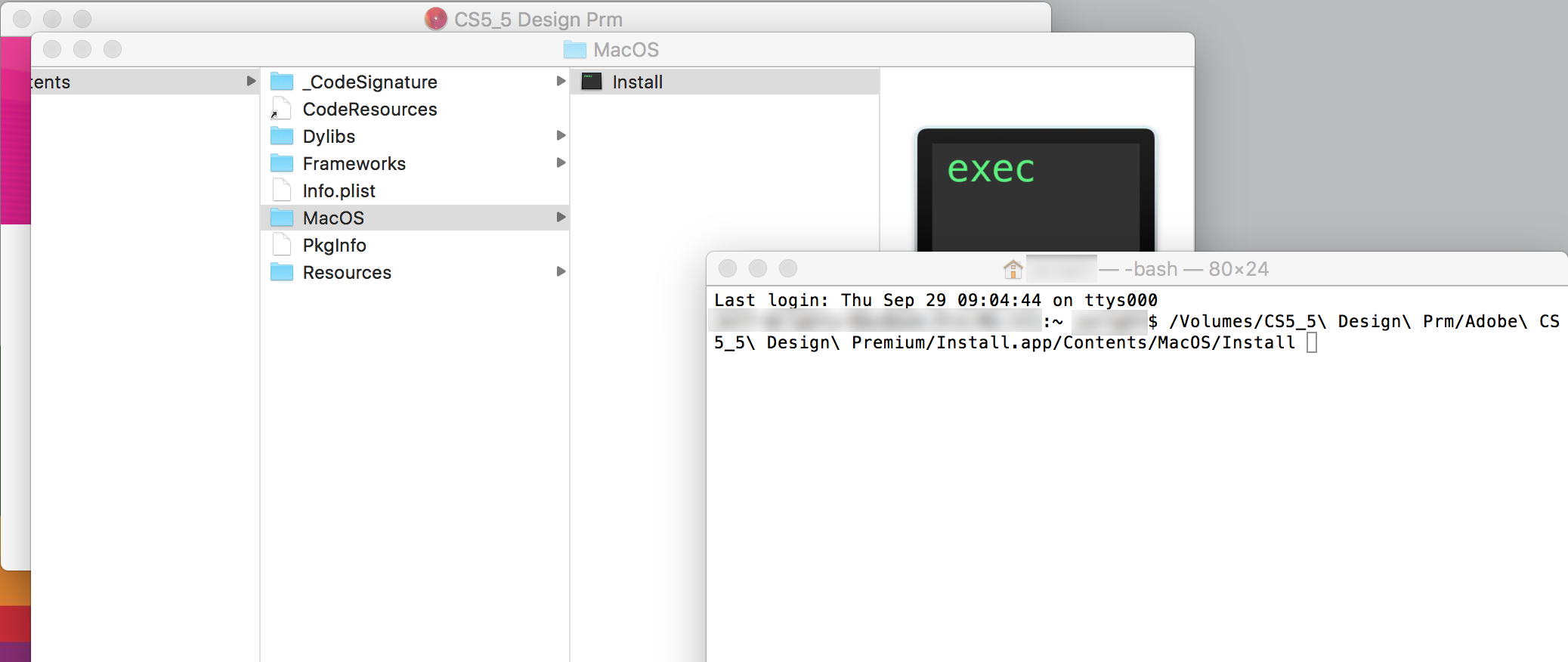
Some applications will use the .pkg extension instead of .dmg—in this case, you can simply follow the instructions to install the software.
Tips for finding software
In our experience, the easiest way to find new software is to search the Web. For example, if you were looking for a way to edit some personal photos on your computer, you could run a Google search for free photo-editing software. If you're not exactly sure what kind of software you're looking for, try describing the tasks you want to complete. For example, if you wanted a way to create to-do lists and organize your appointments, you might search for something like free calendar organizer software.
The Mac App Store
If you're using macOS, you can download and install software from the Mac App Store. The Mac App Store is meant to simplify the process of locating and installing software from third-party developers—when you find an app, you won't have to do any extra work to install it.
Mac Unix Commands
/en/basic-computer-skills/uninstalling-software-from-your-windows-pc/content/